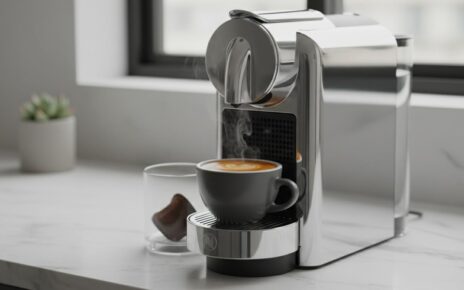
If you love a proper flat white and want it on your own terms, a Breville coffee machine is one of the most reliable ways to get there. This guide breaks down how the machines work, which models suit different budgets and kitchens, and the steps to brew and steam like a pro. You’ll also see a side‑by‑side comparison of popular options sold in New Zealand, plus practical tips for buying, using, and maintaining your setup.
What is
A Breville coffee machine is a home espresso maker designed to deliver café‑style espresso and milk drinks with user‑friendly controls and smart engineering. In New Zealand, the range spans compact single‑boiler machines through to dual‑boiler models with built‑in grinders and automatic milk texturing. They’re made for everyday Kiwi coffee habits—think flat whites, long blacks, and the odd weekend latte—without needing a barista course.
Breville sells manual and semi‑automatic espresso machines (not just pod machines). Some versions integrate a quality burr grinder and assisted tamping, while others pair best with a separate grinder for more control.
How it works
Heating systems
Breville uses three main heating approaches, each affecting speed and temperature stability:
- Thermocoil: Heats water as it flows through a metal coil. Ready in under a minute. Found in older models like the Barista Express. Simple and consistent for daily home use.
- ThermoJet: A fast heater that reaches ready temperature in about 3 seconds. Minimal wait between brewing and steaming. Found in Bambino, Bambino Plus, Barista Pro, and Barista Touch.
- Dual boiler: Separate boilers for brewing and steaming. You can pull shots and texture milk at the same time with exceptional stability. Found in the Dual Boiler and Oracle lines.
Pressure and extraction
A breville coffee machine aims for around 9 bars of pressure at the coffee puck—close to café standards. Most models pre‑infuse (a gentle, low‑pressure wetting) to reduce channeling and improve flavour. Higher‑end units add PID temperature control for tighter consistency across shots.
Grinder: built‑in vs separate
- Built‑in grinder: Convenient and space‑efficient. Breville’s conical burr grinders are consistent and easy to dial in for espresso.
- Separate grinder: More upgrade flexibility. Pairs well with Bambino Plus or the Dual Boiler if you want greater control.
Freshly ground beans are non‑negotiable for good espresso. Pre‑ground stales quickly and rarely extracts well.
Milk texturing
- Manual steam wand: You control temperature and texture. Great for learning silky microfoam for flat whites.
- Automatic milk texturing: Found on models like Bambino Plus and Barista/Oracle Touch. Set your temperature and texture, and the machine steams for you.
Water and filtration
New Zealand water quality varies by region. Using the supplied filter reduces limescale and keeps flavour clean. It also helps the machine last longer and reduces how often you need to descale.
Types / examples
Here’s a quick tour through the most popular styles you’ll see in NZ stores.
Compact starters (no grinder)
- Bambino: Ultra‑fast heat‑up with ThermoJet and a small footprint. Manual steam wand. Best if you already own a grinder.
- Bambino Plus: Adds automatic milk texturing and a steadier steam wand while staying compact. Great for milk‑led drinks.
All‑in‑one (built‑in grinder)
- Barista Express: The classic entry to home espresso with integrated grinder and thermocoil heating.
- Barista Express Impress: Same idea as Express but with assisted tamping for less mess and more repeatability.
- Barista Pro: ThermoJet for near‑instant readiness, faster workflow, and a clearer LCD for shot timing.
- Barista Touch: Adds a touch screen and automatic milk texturing with personalised drink profiles.
Enthusiast level
- Dual Boiler: Serious temperature stability, simultaneous brew and steam, and a 58 mm commercial‑style portafilter. Pair with a good grinder.
- Oracle / Oracle Touch: Dual boiler with a built‑in grinder, automatic dosing, tamping, and milk texturing. The Touch adds guided recipes and a touch interface.
Quick comparison for NZ buyers
| Model | Heating | Built‑in grinder | Milk texturing | Portafilter | Best for | Approx NZD | Notes |
|---|---|---|---|---|---|---|---|
| Bambino | ThermoJet | No | Manual | 54 mm | Small kitchens, espresso learners | $400–$600 | 3‑sec heat‑up; needs a separate grinder |
| Bambino Plus | ThermoJet | No | Automatic or manual | 54 mm | Milk‑first drinkers (flat whites) | $600–$800 | Auto milk with set temps and textures |
| Barista Express | Thermocoil | Yes | Manual | 54 mm | All‑in‑one value | $900–$1,100 | Proven workhorse; slightly slower to heat |
| Barista Pro | ThermoJet | Yes | Manual | 54 mm | Fast workflow, frequent use | $1,200–$1,500 | Quick switch from brew to steam |
| Dual Boiler | Dual boiler | No | Manual | 58 mm | Enthusiasts, tinkerers | $1,800–$2,200 | Stable temp and pressure; pair with quality grinder |
| Oracle Touch | Dual boiler | Yes | Automatic or manual | 58 mm | Hands‑off consistency | $3,800–$5,000 | Auto dose, tamp, and milk; touch recipes |
Prices are indicative and vary by retailer and promotions in New Zealand (Noel Leeming, Harvey Norman, JB Hi‑Fi, Briscoes, Farmers, Kitchen Things, and the Breville NZ website).
Pros and cons
Why a Breville coffee machine makes sense
- Designed for home workflows: clear controls, fast heating, and sensible accessories out of the box.
- Reliable milk performance: easy microfoam for flat whites and lattes, even on entry models.
- Good value at each tier: strong features for the price compared with many competitors.
- Wide NZ availability: local support, parts, and retail options make ownership simpler.
- Upgradeable path: start with a Barista model, move to Dual Boiler later, keep your grinder skills.
Trade‑offs to consider
- 54 mm vs 58 mm: most midrange units use 54 mm baskets, which limits some third‑party accessories compared with 58 mm.
- Maintenance matters: you’ll need to backflush, clean, and occasionally descale to keep performance sharp.
- Noise: built‑in grinders and pumps are audible; place on a solid bench and use a mat to dampen sound.
- Counter space: the footprint of all‑in‑ones is compact but still needs clearance for the hopper and steam wand.
How to use or choose
How to choose the right machine
- Drinks you make: mostly flat whites and cappuccinos? Prioritise strong steaming (ThermoJet or dual boiler) and consider auto milk (Bambino Plus, Barista Touch, Oracle).
- Speed and convenience: want near‑instant start? Choose ThermoJet or dual boiler over thermocoil.
- Budget and space: if you’re tight on space, Bambino or Barista Express fits most Kiwi kitchens. If budget allows, Barista Pro is a big usability jump.
- Built‑in grinder vs separate: choose an all‑in‑one for simplicity. Choose a separate grinder for maximum control and future upgrades.
- Tinkering appetite: love dialing‑in? Dual Boiler plus a good grinder will reward the effort.
- Water quality: if your local water is hard, use filters and plan for more frequent descaling; check your council’s water report.
- Support: buy from NZ retailers for easy warranty service and parts availability.
How to pull a great shot (and steam for a flat white)
- Warm up and prep: Insert a filled water filter, switch on the breville coffee machine, and pre‑heat the portafilter and cup with hot water.
- Grind fresh: Dose the basket (typically 18–20 g for a double on 54 mm; 18 g is common) and distribute evenly. Use the built‑in or separate burr grinder.
- Tamp level: Apply firm, even pressure. On Impress/Oracle, assisted tamping handles this step for you.
- Set the shot: Lock in the portafilter. Aim for about 25–30 seconds for 36–42 g out (a 1:2 brew ratio), adjusting grind as needed.
- Watch the flow: You want a steady, syrupy stream. If it gushes, grind finer. If it chokes, grind coarser.
- Purge the steam wand: Briefly open it to clear condensation.
- Steam milk: Fill a jug to just below the spout, keep the tip near the surface to introduce air for a second or two, then bury the tip slightly to heat and swirl. For a flat white, aim for fine microfoam around 55–60°C.
- Wipe and purge: Clean the steam wand immediately and purge again to keep it clear.
- Pour: Swirl the milk to polish, then pour steadily into the espresso to blend crema and milk for a glossy finish.
Maintenance schedule that actually works
- After every use: Wipe and purge the steam wand; flush the group; empty the drip tray.
- Weekly: Backflush with a cleaning tablet (for models with a three‑way valve) and wipe the grinder chute.
- Monthly: Deep‑clean baskets, portafilter, and shower screen; vacuum the grinder hopper and brush burrs.
- Every 2–3 months: Replace the water filter; descale as needed based on your water hardness and machine prompts.
FAQ
Which Breville coffee machine is best for flat whites in NZ?
For value, the Bambino Plus or Barista Pro are standouts thanks to fast heat‑up and strong steam performance. If you want café‑level consistency and simultaneous brew/steam, the Dual Boiler or Oracle Touch are top picks.
ThermoJet vs dual boiler: which should I choose?
ThermoJet is extremely fast and efficient for single drinks, with minimal wait between brewing and steaming. Dual boilers deliver rock‑steady temperature and let you brew and steam at the same time—great for entertaining or back‑to‑back coffees.
Do Breville machines in New Zealand use 230V power?
Yes. Breville machines sold in New Zealand are designed for 230V/50Hz mains with NZ/AU plugs. If you import a machine, ensure it matches local voltage and plug type.
Are 54 mm portafilters a downside?
Not necessarily. Breville’s 54 mm systems can produce excellent espresso and have plenty of compatible baskets and tools. The 58 mm size on Dual Boiler and Oracle offers broader third‑party accessory options and a more “commercial” feel.
Can I use pre‑ground coffee?
You can, but flavour and consistency will suffer. Espresso needs very fresh, precisely ground coffee. If you must use pre‑ground, store it airtight, keep small amounts, and expect to tweak shot times.
How often should I descale a Breville coffee machine in NZ?
It depends on your water. With filtered water, many households can descale every 2–3 months or when the machine prompts. If your area has harder water, descale more often and always use the in‑tank filter.
Is Breville the same as Sage?
Yes, it’s the same manufacturer. In the UK and parts of Europe, Breville espresso machines are sold under the Sage brand. In New Zealand, they’re branded Breville.
Where should I buy in New Zealand?
Authorised retailers like Noel Leeming, Harvey Norman, JB Hi‑Fi, Briscoes, Farmers, Kitchen Things, and the official Breville NZ store offer local warranty support. Prices vary, so check promotions.
What’s the typical warranty?
Warranty terms vary by model and retailer, often around 1–2 years in New Zealand. Confirm details at purchase and consider extended coverage if you make several coffees daily.
Final pointers for better coffee at home
- Buy fresh beans from a NZ roaster and use them within 2–4 weeks of roast.
- Weigh your dose and yield; it’s the fastest way to improve consistency.
- Use the water filter and keep the machine clean; it pays back in flavour and longevity.
- Pick the breville coffee machine that fits your routine today, with a clear upgrade path for tomorrow.
Set up right, a Breville coffee machine turns the morning rush into a quick, satisfying ritual—and keeps your flat white habit close to home.