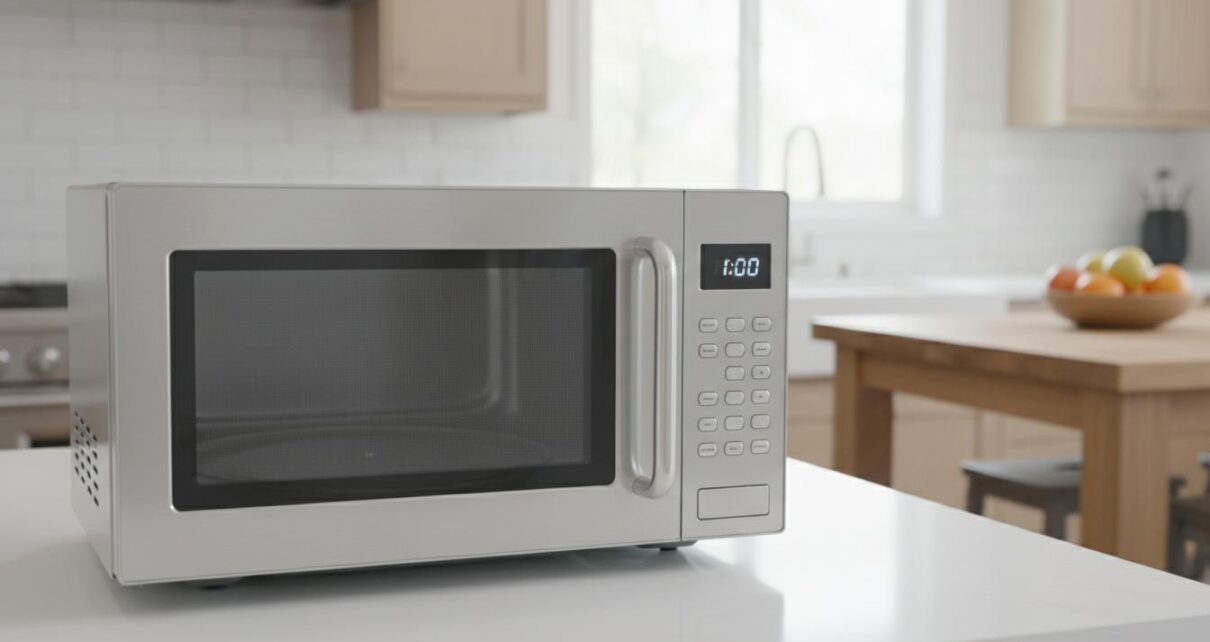
A good microwave is one of the hardest-working tools in a Kiwi kitchen. It reheats leftovers without drying them out, defrosts that pack of mince when dinner plans change, and can even bake or grill if you choose the right model. This guide explains what a microwave is, how it works, the main types you’ll see in New Zealand stores, the real pros and cons, and exactly how to choose and use one with confidence.
What is
A microwave is a kitchen appliance that cooks and reheats food using high‑frequency radio waves (microwaves), typically at 2.45 GHz. Those waves excite water molecules in food, generating heat from within. The result is fast, efficient heating compared with a conventional oven, especially for small portions, reheating, steaming veg, and defrosting.
In New Zealand, most microwaves are benchtop models that plug into a standard 230 V, 50 Hz socket. You’ll also find built‑in designs for a seamless look, plus convection and combi models that can brown and bake.
How it works
The science in plain English
Inside the cabinet is a magnetron that converts electricity into microwaves. A waveguide directs that energy into the cooking cavity. Microwaves cause polar molecules—mainly water—to jiggle. That movement creates heat (dielectric heating), warming the food. Because the waves penetrate a short distance then fade, heat continues spreading inward by conduction. That’s why letting food rest after cooking evens out the temperature.
The door has a metal mesh you can see through. It blocks microwaves while letting light out, creating a Faraday cage so the energy stays inside. Safety interlocks cut power the moment the door opens.
Turntable, flatbed, and inverter tech
- Turntable: A glass tray rotates the food to help even out hot and cool spots as the energy pattern moves across the cavity.
- Flatbed: No turntable. Instead, the energy is distributed differently, giving you a flat floor, more usable space, and easier cleaning.
- Inverter microwave: Instead of cycling the magnetron fully on/off to create “power levels,” an inverter supplies steady, adjustable power. That gives gentler, more precise heating—useful for chocolate, custard, and fish.
Power, time, and running cost
Microwave output power (in watts) tells you how fast it heats. An 800 W microwave will take roughly 25% longer than a 1000 W model for the same job. For everyday use, 900–1200 W is the sweet spot for Kiwi kitchens.
Microwaves are energy‑smart for small tasks. Example: running a 1000 W microwave for five minutes uses about 0.083 kWh of electricity. At a typical NZ residential rate (often around NZ$0.25–$0.40 per kWh, check your bill), that’s about 2–3 cents. Long cooks or oven‑style baking change the maths; for browning or roasting, a conventional oven or air fryer may suit better.
Types / examples
Know the main types before you start shopping. The right microwave depends on what you actually cook and how much bench space you have.
| Type | Typical capacity (L) | Typical output (W) | Best for | Key pros | Watch‑outs | Typical NZ price range (NZ$) |
|---|---|---|---|---|---|---|
| Benchtop (standard) | 20–34 | 800–1100 | Everyday reheat, defrost, simple cooking | Affordable, easy to place, wide choice | On/off power cycling can be harsh on delicate foods | 120–450 |
| Inverter microwave | 23–34 | 900–1200 | Smoother reheating, melting, steaming fish/veg | Even heating at low power; energy‑efficient control | Often pricier than standard models | 250–700 |
| Grill microwave | 23–31 | 900–1100 + grill | Toasting, cheese melts, crisping toppings | Adds browning element inside | Not a full oven; grill can be slower than you expect | 250–650 |
| Convection / combi | 25–44 | 900–1200 + convection | Baking small batches, roasting, crisp pizza | Microwave + fan‑forced heat = true multi‑cooker | Larger, heavier, needs ventilation; learning curve | 450–1,800 |
| Flatbed microwave | 23–32 | 900–1100 | Large dishes, easy cleaning | No turntable, more usable area | Distribution tech varies by brand | 300–800 |
| Built‑in microwave | 25–44 | 900–1200 | Seamless cabinetry in new builds or renos | Clean look, frees bench space | Needs correct trim kit and ventilation; higher cost | 700–2,500+ |
Capacity and footprint
Capacity is listed in litres (L). A 20–25 L compact microwave suits singles, students, or a small apartment. Families often prefer 30–44 L to fit larger plates and square casserole dishes. Check internal width and height, not just litres, if you use tall bowls or wide platters.
Useful features to look for
- Sensor cooking/reheat: Detects steam and stops when food is hot, reducing guesswork.
- Auto menus: One‑touch options for popcorn, jacket potatoes, rice, veg, beverages.
- Power levels: At least 5–10 steps. Inverter models do this best.
- Defrost by weight/time: Better results if you can set weight in grams.
- Child lock: Prevents accidental starts.
- Quick‑start: 30‑second add‑on button is handy.
- Turntable off: Lets you use big rectangular dishes (if your model allows).
- Interior finish: Ceramic enamel or stainless can be easier to clean.
- Bright cavity light and clear display: Makes it easier to judge doneness.
Pros and cons
Pros
- Speed: Heats food in minutes, not half an hour.
- Efficiency: Uses less energy for small portions than heating a full oven.
- Convenience: Reliable reheating, quick defrost, melting, steaming veg.
- Precision with inverter: Gentle power for chocolate, butter, custard, and fish.
- Space‑saving: Benchtop models are compact; built‑ins free bench space.
Cons
- Limited browning: Standard microwaves don’t crisp food (grill/convection help).
- Hot spots: Stirring and standing time are still needed for even heat.
- Container rules: No metal, and only microwave‑safe plastics.
- Ventilation needs: Built‑ins require correct trim kits and clearances.
- Noise and steam: Some models are louder and vent more moisture than others.
How to use or choose
How to choose a microwave (NZ‑focused, step by step)
- Measure your space. Note width, depth, and height on the bench or in the cabinet. Leave clearance for ventilation per the manual.
- Check your power outlet. Most microwaves use a standard 10 A NZ plug. Some larger combi units may require a 15 A outlet—verify before buying.
- Pick capacity by household size and dish size. 20–25 L for one or two people; 30–44 L for families or large plates.
- Choose output power. Aim for 900–1200 W if you reheat often. Lower‑power (700–800 W) works but takes longer.
- Decide the type. Standard for simple reheats; inverter for smoother results; grill for melts; convection/combi for baking and crisping; flatbed for easy cleaning; built‑in for a seamless look.
- Prioritise features you’ll use. Sensor reheat, child lock, turntable off, interior light, quiet operation, and intuitive dials or buttons.
- Check dimensions inside the cavity. Make sure your favourite bowl or square dish fits with the turntable rotating.
- Consider cleaning and durability. Look for a wipeable interior, a sturdy door latch, and a stable turntable or flatbed support.
- Compare warranty and local support. Well‑known brands with NZ service networks make repairs easier.
- Plan delivery and disposal. If replacing an old unit, arrange e‑waste recycling through your council or an approved recycler.
How to use a microwave safely and get better results
- Use microwave‑safe containers: glass (e.g., borosilicate), ceramic, or plastics labelled “microwave safe.” Avoid cracked or crazed dishes.
- Avoid metal. Don’t put cutlery, metal‑trimmed mugs, or closed cans inside. Small amounts of foil only if your manual explicitly allows it, and keep it smooth and away from cavity walls.
- Cover food loosely. A vented lid or microwave‑safe wrap reduces splatter and keeps moisture in. Leave a gap for steam.
- Stir and rotate. Pause halfway to stir soups and stews. For solid foods, rearrange pieces. Let food stand 1–3 minutes to even heat.
- Use the right power level. 100% for boiling water; 50%–70% for reheating plates and casseroles; 30%–50% for defrosting; 10%–30% for chocolate and butter. Inverter models shine here.
- Check temperature carefully. Microwaves can create hot spots. For baby food or milk, shake or stir well and test on your wrist.
- Clean often. Wipe spills promptly. For deep cleaning, heat a bowl of water with lemon slices or vinegar for 3–5 minutes, then wipe the softened splatter.
Quick power test
Want to estimate your microwave’s real‑world power? Heat 250 ml of room‑temperature water in a microwave‑safe jug for 2 minutes on High. If it reaches a near‑boil, you’re likely around 900–1100 W. If it’s only warm, expect longer cook times and adjust recipes accordingly.
Installation notes for NZ homes
- Benchtop placement: Keep vents clear. Don’t push the back hard against a wall if the manual calls for space.
- Built‑in kits: Use the brand’s trim kit and follow ventilation clearances exactly. Poor airflow can shorten the microwave’s life.
- Electrical: New Zealand mains supply is 230 V, 50 Hz. Most units are fine on a standard 10 A circuit. If a model has a 15 A plug, a matching outlet installed by a licensed electrician is required.
FAQ
Are microwaves safe?
Yes—when used as intended. Household microwaves are designed to comply with appliance safety standards and include multiple door interlocks. The door mesh blocks microwaves from escaping. Numerous reviews by health agencies have found no confirmed health risks from normal microwave oven use.
Does a microwave cook from the inside out?
No. Microwaves penetrate a short distance into the food and heat that outer layer first. Heat then spreads inward by conduction. Stirring and standing time help even out the temperature.
What size microwave do I need?
For one or two people, a 20–25 L model handles mugs, reheats, and small casseroles. For a family or if you use wide dinner plates or square dishes, look at 30–44 L. Check the internal width and turning circle of the turntable.
What is an inverter microwave?
An inverter microwave provides variable, steady power instead of pulsing fully on/off. That gives smoother results at lower power levels—great for defrosting mince, melting chocolate, and reheating without hot edges and cold centres.
Can I put metal or foil in a microwave?
Avoid metal. It can cause arcing and damage. Some manuals allow small, smooth pieces of foil to shield parts of food, but it must be kept away from cavity walls and corners. If in doubt, skip the foil or use a microwave‑safe cover.
Will a microwave interfere with Wi‑Fi?
Microwaves operate around 2.45 GHz, close to 2.4 GHz Wi‑Fi. A running microwave can add a little noise to that band, especially if you’re right next to it, but modern devices usually cope fine. If your Wi‑Fi drops during reheating, try moving the router a few metres away.
How do I dispose of an old microwave in New Zealand?
Don’t put it in general rubbish. Many councils and e‑waste recyclers accept microwaves. Check your local council’s website (e.g., Auckland Council, Wellington City Council) for drop‑off sites or events. Remove the glass tray and turntable ring before transport.
Can I install a built‑in microwave in any cabinet?
Only if the cabinet meets the clearance and ventilation requirements in the manual and you use the correct trim kit. Built‑ins need airflow paths. If the unit has a 15 A plug or hard‑wiring requirements, use a licensed electrician.
Is a convection microwave worth it?
If you want one appliance to reheat and also bake small batches or crisp up frozen chips, a convection or combi microwave is handy. If you only reheat and defrost, a standard or inverter microwave is better value and takes less space.
What containers are microwave safe?
Use glass, ceramic, and BPA‑free plastics labelled “microwave safe.” Avoid single‑use takeaway containers unless marked accordingly; some soften or warp. Never use cracked dishes, sealed jars, or containers with metal trim.
Any New Zealand‑specific tips?
- Power bills: Because pricing varies by region and plan, check your kWh rate to estimate running costs for your microwave.
- Benchtop space: Many NZ kitchens are compact. Measure the door swing and depth with the plug and cord included.
- Campervans and tiny homes: Running a microwave off batteries needs a suitably sized inverter and battery bank. Seek specialist advice.
Bottom line
The right microwave makes weekday cooking easier and cheaper. Choose the size and wattage that match your dishes and family, decide whether inverter or convection features matter to you, and don’t skimp on practical touches like a bright light, clear controls, and a child lock. Use proper containers, stir and stand, and you’ll get fast, even results with minimal mess—very Kiwi, very practical.