Blenheim weather has a reputation: big blue skies, long sunny days, and crisp winter mornings. If you live here, you learn to keep sunglasses and a warm layer within arm’s reach. If you’re visiting, you’ll want to time your trip for the grapes, the light, and the wind. This guide explains how the Blenheim climate works, what each season feels like, how to read the local forecast, and the simple steps to plan your day the smart way.
What is
When people say “Blenheim is one of New Zealand’s sunniest towns,” they’re not exaggerating. The Wairau Plain sits in the rain shadow of the Southern Alps, so it’s dry and bright compared with much of the country. Summers run warm to hot, winters are cool with regular frosts, and rain arrives in short bursts more than week-long soakers.
In plain terms, Blenheim weather is temperate and dry by New Zealand standards:
- Sunshine: often around 2,400–2,600 hours per year, near the top nationally.
- Rainfall: typically about 600–700 mm a year, with fewer wet days than most regions.
- Temperatures: summer afternoons commonly 24–28°C (hotter under a nor’wester); winter days 10–12°C with cold nights near 0°C and frequent frosts.
- Wind: a mix of dry northwesterlies and cool southerly changes; valley funneling can make gusts feel stronger than the forecast suggests.
- UV: very high in summer—sun protection is essential.
Because Blenheim sits about 10 km from the coast, the sea moderates the extremes less than in coastal cities. That’s why you get hot, dry afternoons but also sharp winter chills and big day–night ranges that the vines love.
How it works
Blenheim weather is shaped by geography first. The Southern Alps block moist westerlies, wringing out rain over the West Coast and leaving Marlborough in their dry “rain shadow.” When that air spills east as a föhn wind, it warms and dries further, pushing Blenheim temperatures up quickly on nor’west days.
From the south, the Cook Strait acts like a wind corridor. Fast-moving southerly changes can flip a warm afternoon into a cool, gusty evening with low cloud and a burst of showers. Because Blenheim is inland, sea breezes are weaker, so the daily temperature swing is larger than in places like Wellington or Nelson.
Microclimates in and around Blenheim
- Wairau Plain (township, Springlands, Renwick): warmest and driest; big diurnal range; frequent frosts on calm winter nights.
- Awatere Valley and Seddon: often windier and drier; stronger nor’westers; crisper nights.
- Rarangi and Cloudy Bay coast: cooler in summer, milder at night, a touch more wind and salt air.
- Picton and Queen Charlotte Sound (nearby but different): more maritime—slightly more rain, narrower day–night range.
Seasonal climate drivers
- El Niño: typically strengthens westerlies, which can mean drier, sunnier conditions for Marlborough and more nor’west heat spikes.
- La Niña: often brings more northeasterly flow, adding cloud and occasional coastal showers; inland Blenheim can still stay relatively dry.
- Anticyclones: common in summer and autumn, delivering long, settled spells with light winds and clear skies.
Day to day, the setup is simple: calm, clear mornings; breezier and warmer afternoons; rapid cool-down after sunset unless a nor’wester holds on.
Types / examples
Season-by-season: what the weather in Blenheim feels like
Summer (December–February)
Warm to hot, dry, and bright. Afternoon highs around the mid-20s; 30°C+ possible under a nor’wester. UV is very high. Showers are brief; thunderstorms are uncommon but can pop up over the ranges.
Autumn (March–May)
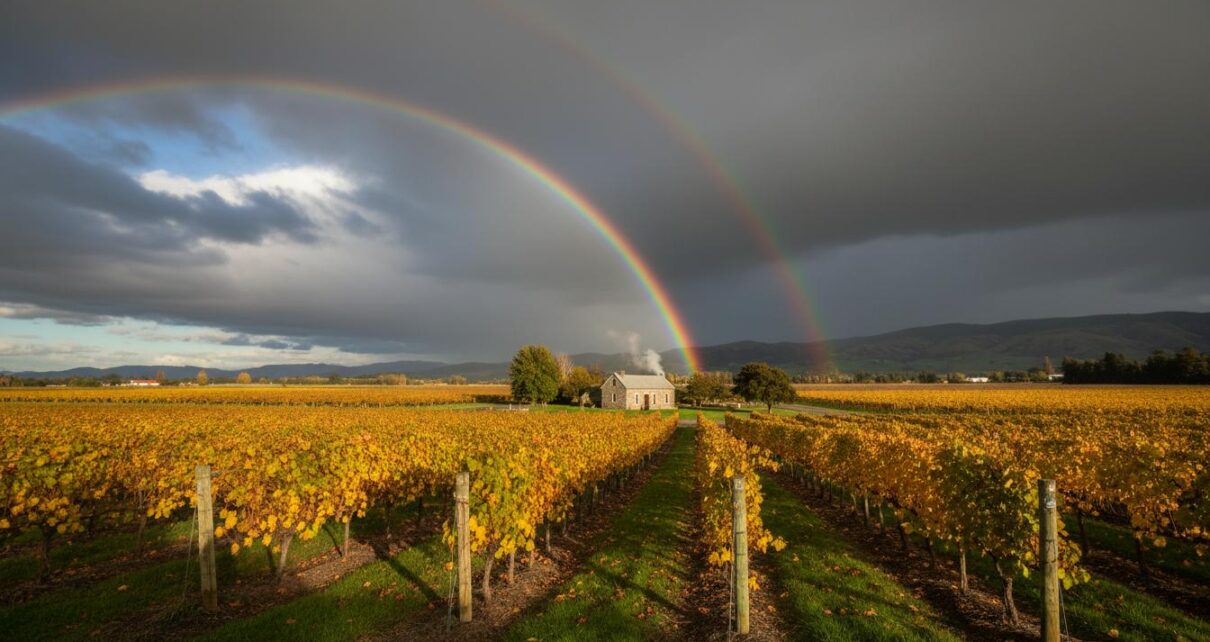
Settled and clear. Harvest season brings cool, misty mornings and golden light. Days are comfortable (high teens to low 20s), nights cool. Rain comes in short pulses between long sunny runs.
Winter (June–August)
Cool days, cold nights, and frequent frosts on calm mornings. Daytime highs around 10–12°C. Fog can linger early, then clear to sunshine. Southerly fronts sweep through quickly with showers and a chill, snow staying on nearby ranges rather than the town.
Spring (September–November)
Changeable. Expect a mix of bright days, gusty spells, and fast-moving showers. Temperatures climb quickly in October and November. Windy interludes are common, especially with westerly patterns.
Typical day snapshots
- Classic summer day: cool start, blue sky, light winds by late morning, a warm breeze mid-afternoon, fast cooldown after sunset.
- Nor’wester day: jump straight to hot and dry; wind gusts funnel down the Wairau; clouds hug the ranges, town stays sunny.
- Southerly change: warm lunchtime, then a quick switch—gusty southerly, cloud, a few showers, and a much cooler evening.
Month-by-month comparison table
| Month | Typical High / Low (°C) | Rain Days (≥1 mm) | Sunshine (hrs) | UV Risk | Notes |
|---|---|---|---|---|---|
| Jan | 26 / 13 | 4–6 | 260–280 | Very High | Peak warmth; dry; afternoon sea breezes are weaker inland. |
| Feb | 26 / 13 | 4–6 | 230–260 | Very High | Hot spells under nor’wester; superb for outdoor dining. |
| Mar | 23 / 11 | 5–7 | 210–230 | High | Harvest underway; calm mornings and golden afternoons. |
| Apr | 20 / 8 | 6–8 | 180–200 | Moderate–High | Clear spells; first frosts late month on calm nights. |
| May | 16 / 5 | 7–9 | 150–170 | Moderate | Chilly nights; foggy dawns then bright. |
| Jun | 12 / 2 | 7–9 | 120–140 | Low–Moderate | Regular frosts; quick southerly fronts. |
| Jul | 11 / 1 | 7–9 | 120–140 | Low–Moderate | Coldest month; snow stays on ranges, not town. |
| Aug | 12 / 2 | 6–8 | 140–160 | Moderate | Longer days; windier interludes. |
| Sep | 15 / 4 | 7–9 | 160–180 | Moderate–High | Changeable; first proper spring warmth. |
| Oct | 18 / 6 | 6–8 | 200–220 | High | Windy spells; bright, fast-drying weather. |
| Nov | 21 / 9 | 5–7 | 220–240 | Very High | Warm afternoons; UV jumps quickly. |
| Dec | 24 / 11 | 4–6 | 240–260 | Very High | Settled runs between quick southerly changes. |
Figures are indicative ranges for the Blenheim climate and help you compare months at a glance. Always check the latest Blenheim forecast for specifics.
Pros and cons
Why people love Blenheim weather
- Sunshine: reliable blue-sky days for cycling, picnics, and cellar doors.
- Low humidity: heat feels drier and more comfortable than in the far north.
- Predictable patterns: long settled spells in summer and autumn make planning easy.
- Big day–night range: great for viticulture, crisp evenings after warm afternoons.
What to watch for
- High UV: even on breezy days you can burn quickly—sun protection isn’t optional.
- Drought and water restrictions: dry summers can stretch supplies; gardens need planning.
- Wind spikes: nor’wester gusts arrive fast; secure trampolines and light outdoor gear.
- Frosts: winter mornings can be icy; watch rural roads and vineyard frost alerts.
- Fire risk: dry grass on the Wither Hills can be a hazard in hot, windy spells—follow council restrictions.
How to use or choose
Best times to visit based on Blenheim weather
- Summer (Dec–Feb): hot, dry, long days—perfect for outdoor dining and river swims; book air-conditioned accommodation.
- Autumn (Mar–Apr): calm, clear, and photogenic—ideal for wine touring and cycling the vines.
- Spring (Oct–Nov): bright and fresh with some wind—great for hiking if you pack layers.
- Winter (Jun–Aug): cool and sunny between frosts—quiet cellar doors, cheaper stays; bring warm layers.
How to plan a day around the Blenheim forecast
- Check MetService for the Blenheim forecast, wind, and any weather watches.
- Look at hourly wind: if a nor’wester is due, schedule exposed activities early.
- Scan the UV index: set sun protection alarms between 10 a.m. and 4 p.m. in summer.
- Note overnight lows: plan for frost, fog, or iced windscreens in winter.
- If heading coastal (Rarangi, Whites Bay), check marine and tide info as conditions differ from town.
- For vineyard visits or cycling, pick routes with shelter on windy days and carry water.
- Before fire season outings, check Marlborough District Council for any restrictions.
What to pack by season
- Summer: hat, sunglasses, SPF 50+, light long sleeves, breathable shorts, refillable bottle, and a layer for the evening cooldown.
- Autumn: T-shirt and light jacket combo, jeans, and a warm layer for clear, cool nights.
- Winter: insulated jacket, beanie, gloves for frosty mornings, and sunglasses for bright days.
- Spring: layers you can add or peel off quickly; windproof shell for gusty afternoons.
Choosing where to stay, with weather in mind
- In town (Wairau Plain): warmer and calmer at night; ask for air con in summer.
- Coastal stays (Rarangi): cooler afternoons and more breeze; great on hot days.
- Awatere/Waihopai: beautiful and quiet but cooler nights and more wind—pack extra layers.
FAQ
Is Blenheim really one of New Zealand’s sunniest places?
Yes. Blenheim regularly ranks near the top for annual sunshine hours, often around 2,400–2,600 hours. That’s a key feature of Blenheim weather and a reason the wine industry thrives here.
Does Blenheim get snow?
Snow is rare in the town itself. Nearby ranges can get winter snow, but in Blenheim you’ll more often see frost and foggy mornings than falling snow.
How windy is it?
Wind varies. Calm, sunny days are common, especially under summer highs. That said, nor’wester events can be gusty, and southerly changes can arrive fast. The Wairau Valley funnels wind, so gusts may feel stronger than a simple “breeze” in the forecast.
How often does it rain?
Less often than most New Zealand regions. Expect short, sharp rain events separated by long dry spells. Annual rainfall typically sits around 600–700 mm, with slightly more wet days in winter and spring.
What’s the UV like?
High to very high from late spring through summer. Even on breezy days, UV can burn skin quickly. Sunscreen, a hat, and sunglasses are must-haves.
When is the best time to visit?
For warm, settled weather, December to March is hard to beat. For calmer days with softer light (and grape harvest buzz), March and April are excellent. If you prefer cool, bright days without crowds, winter works—just pack warm layers.
Is climate change affecting Blenheim weather?
New Zealand has warmed over the last century, and Marlborough is seeing more very warm days, fewer frosts, and a higher risk of extended dry spells. Heavy rain can still occur, but long dry runs in summer are becoming more likely. Always follow local water and fire guidance in hot, dry periods.
Where should I get an accurate Blenheim forecast?
Use MetService for daily forecasts, watches, and warnings. NIWA provides climate summaries and seasonal outlooks that help you understand broader patterns affecting Marlborough weather.
Any quick safety tips tied to Blenheim climate?
- Summer: hydrate, cover up, and limit peak UV exposure.
- Windy days: secure loose gear; choose sheltered tracks and bike routes.
- Winter: watch for frost on rural roads at dawn; allow extra time for fog.
- Dry spells: respect fire bans and keep vehicles off long, dry grass.
Final take
Blenheim weather is straightforward once you know the pattern: plenty of sun, quick-moving changes, and big day–night swings. Plan with the Blenheim forecast, carry a layer, respect the UV, and you’ll get the best from Marlborough’s blue-sky days—whether you’re cycling between cellar doors or heading up the Wither Hills for a late-afternoon view.