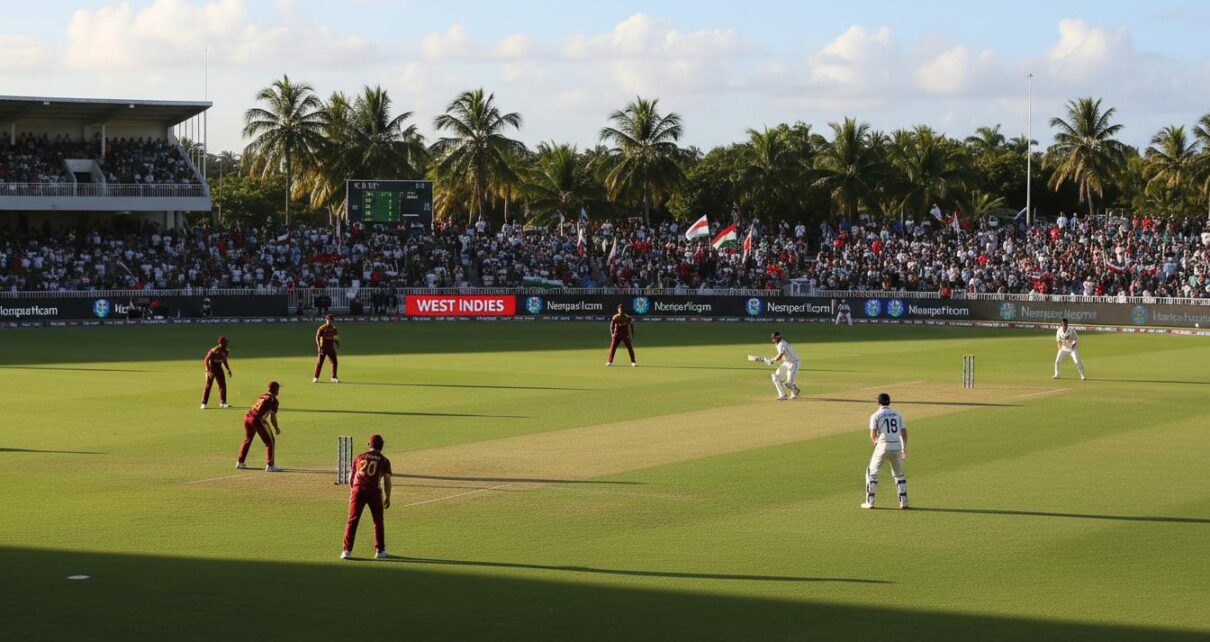
When West Indies vs New Zealand lights up the schedule, you know you’re in for contrast and craft. Caribbean flair against Kiwi precision. Big hitters vs swing merchants. This guide breaks down what the rivalry is, how matches are arranged, the formats and famous examples, the pros and cons for fans and teams, and practical steps for New Zealanders to watch, choose, and get more from every game.
What is
West Indies vs New Zealand is an international cricket matchup across Tests, ODIs, and T20Is featuring the Black Caps and the Men in Maroon. The rivalry stretches back to the 1950s, and it has shifted with the eras: West Indies ruled the 1970s–80s with pace and swagger; New Zealand have been strong at home in the 2000s and 2010s, built on swing bowling, disciplined batting, and smart field settings.
For Kiwi fans, the appeal is simple. You get style clashes that reveal a lot about conditions and tactics. In New Zealand, the ball seams and rewards patience; in the Caribbean, it can grip and reward power and spin. In global tournaments—especially World Cups—West Indies vs New Zealand often delivers tight finishes and breakout performances.
How it works
Matches between the sides happen in two main ways: bilateral tours and ICC events. The timing is set through the ICC Future Tours Programme (FTP), which rotates home and away series. Each series can include a mix of formats, with days off for travel and practice. Squads are selected format-by-format, so you’ll often see fresh faces in T20Is compared to Tests.
Key mechanics to know:
- Tests: up to five days, red ball, two innings each. Since 2019, Test series feed into the ICC World Test Championship points table.
- ODIs: 50 overs per side, white ball, day or day/night matches with coloured kits.
- T20Is: 20 overs per side, fast scoring, frequent match-ups in Caribbean and New Zealand summers.
- DRS: Umpire’s call, ball-tracking, and edge-detection are standard in top-tier series and ICC events.
- Venues: In New Zealand, think Basin Reserve, Seddon Park, Eden Park, Hagley Oval, and Bay Oval. In the Caribbean, Sabina Park, Kensington Oval, Queen’s Park Oval, and Providence are staples.
Broadcast in New Zealand is typically via Sky Sport, with live streaming on Sky Sport Now or Sky Go. Match start times vary: home matches are prime-time friendly, while Caribbean fixtures often land early morning NZT.
Types / examples
Bilateral series
These are home-and-away tours scheduled in the FTP. They often include warm-ups, followed by a block of T20Is, ODIs, and then Tests—or the other way around depending on season and conditions. Caribbean tours can be humid with slower pitches; New Zealand tours tend to be cooler with swing-friendly mornings.
ICC tournaments
West Indies vs New Zealand fixtures in ICC Cricket World Cups and T20 World Cups carry do-or-die stakes, with neutral venues and knockout pressure. Bowlers have shorter spells, captains take braver fielding calls, and small moments decide big results.
Notable recent examples
- 2015 Cricket World Cup quarter-final, Wellington: New Zealand beat West Indies after Martin Guptill’s 237*, a record-setting ODI innings at the time.
- 2019 Cricket World Cup group match, Manchester: New Zealand won by five runs after Carlos Brathwaite’s dramatic 101 ended with a catch near the rope.
- 2020 Test series in New Zealand: Black Caps won 2–0, with dominant top-order batting and relentless seam bowling.
- 2022 T20I series in the Caribbean: New Zealand claimed the series 2–1, adapting to slower pitches and cross-breezes.
Comparison: home vs away realities
| Aspect | In New Zealand (Black Caps home) | In the Caribbean (West Indies home) |
|---|---|---|
| Pitch and ball | Fresh surfaces, seam and swing early; true bounce; new ball threat | Drier surfaces; variable pace; more grip; white-ball change-ups grip late |
| Bowling impact | Right-arm seamers and left-arm swing thrive; consistent lengths pay | Hit-the-deck pace early; cutters and spinners later; yorkers at the death |
| Batting approach | Leave well outside off; cash in after 30 overs in ODIs | Target short sides; rotate strike to beat slowish middle overs |
| Fielding tactics | Catchers in front of the wicket early; ring field squeezes | Sweepers on the rope; protect angles and wind-assisted hits |
| Match times (NZT) | Day or evening starts; family-friendly viewing | Early morning or overnight; highlights packages matter |
| Broadcast in NZ | Sky Sport; streaming on Sky Sport Now/Sky Go | Sky Sport coverage of away tours; streaming as above |
Spotlight on famous matches
| Year | Format | Venue | Result | Why it mattered |
|---|---|---|---|---|
| 2015 | ODI (CWC QF) | Wellington | New Zealand won | Guptill’s 237* powered a World Cup surge on home soil |
| 2019 | ODI (CWC) | Manchester | New Zealand won by 5 runs | Brathwaite’s near-miracle chase ended inches short |
| 2020 | Test series | Hamilton/Wellington | New Zealand 2–0 | Home dominance with swing and top-order weight |
| 2022 | T20I series | Caribbean | New Zealand 2–1 | Black Caps adapted plans for slower decks |
Pros and cons
For New Zealand fans
- Pros: Distinctive styles make every West Indies vs New Zealand match tactically rich; strong home record builds confidence; ICC clashes often deliver last-over thrillers.
- Cons: Caribbean time zones can be brutal; rain and humidity can interrupt rhythm; squad rotation in T20Is may hide first-choice line-ups.
For teams
- Pros for New Zealand: Seam-friendly home pitches; deep, adaptable bowling units; strong catching standards.
- Pros for West Indies: Ball-striking depth; powerplay impact in T20Is; spinners and cutters at home.
- Cons for New Zealand: Away slow surfaces blunt swing; need for power at the death in T20s.
- Cons for West Indies: New Zealand’s discipline in the middle overs; swing against top order early in NZ.
How to use or choose
Picking the right format to watch
- If you love chess-like battles, pick Tests in New Zealand—movement in the morning, accumulation after lunch, and late-day grit.
- If you want narrative arcs in a day, pick ODIs—watch momentum swing through powerplays and the 30–40 over squeeze.
- If you want pure adrenaline, pick T20Is—West Indies vs New Zealand often turns on a single over.
Step-by-step: How Kiwis can follow a West Indies vs New Zealand series
- Check the schedule on the NZC website and the ICC fixtures page for dates, venues, and formats.
- Choose your viewing plan: Sky Sport on TV, or stream with Sky Sport Now/Sky Go.
- Note start times in NZT. For Caribbean matches, set early alarms or plan for condensed highlights.
- Scan the squads and likely XIs. Look for role clarity: powerplay bowlers, finishers, main spinner.
- Read the pitch and weather notes on match day. Adjust expectations for totals and bowling plans.
- Track key match-ups: left-arm swing vs right-hand power, wrist-spin vs middle-order anchors.
- After play, catch the highlights and wagon wheels to understand momentum shifts.
Buying tickets in New Zealand
- Use the official New Zealand Cricket channels and venue partners (e.g., Ticketek or Ticketmaster, depending on the ground).
- For Tests, consider shaded seating and multi-day passes; for day/night ODIs and T20Is, check transport options post-match.
- Arrive early for security checks and to catch warm-ups—great for younger fans.
Smart viewing tips
- In New Zealand conditions, watch the first 15 overs closely—games tilt early.
- In the Caribbean, keep an eye on overs 12–18 in white-ball games—cutters, spin, and boundary angles decide totals.
- Use innings break analysis to reset expectations: par score changes with dew, wind, and boundary sizes.
FAQ
Where can I watch West Indies vs New Zealand in NZ?
Sky Sport holds broadcast rights for most tours and ICC events. Stream via Sky Sport Now or Sky Go if you’re on the move.
How often do the teams meet?
They meet in cycles under the ICC FTP, with tours rotating home and away. ICC tournaments add neutral-venue clashes in most cycles.
Who has the upper hand?
It has swung with eras. West Indies dominated in the 1970s–80s. In recent years, New Zealand have been strong at home across formats, while white-ball games in the Caribbean can be tight.
What makes this rivalry unique?
Contrast. Swing and discipline vs power and flair. Different pitches, winds, and boundary shapes force both teams to adapt every time.
Which venues in New Zealand are best for this matchup?
Hagley Oval for new-ball movement, Basin Reserve for patient batting, Seddon Park for balanced white-ball cricket, and Eden Park for short straight boundaries in T20Is.
What time do Caribbean matches start in NZT?
Often early morning or overnight. Check listings and plan for replay or highlights if the start time is rough.
Any iconic West Indies vs New Zealand moments?
Yes—Martin Guptill’s 237* in Wellington (2015 CWC) and the 2019 World Cup nail-biter in Manchester, where Carlos Brathwaite’s century fell just short.
How do conditions change the game plan?
In New Zealand, leave-and-defend early, attack later. In the Caribbean, target match-ups, use pace-off bowling, and manage cross-winds.
Do these matches affect the World Test Championship?
Yes. Any Test series between the sides contributes points to the WTC table for both teams.
Is this a good fixture for families?
Absolutely. Day games in New Zealand are family-friendly, with accessible venues and clear sightlines. T20s are short and high-energy.
Final take
West Indies vs New Zealand keeps delivering because it asks both teams to solve new problems each time they meet. If you’re in Aotearoa, the blueprint is simple: lock in the broadcast, understand the conditions, and track the key match-ups. You’ll see why this fixture has a habit of producing moments you remember long after the final ball.